Few upgrades change the feel of a room as dramatically as a hand-applied wall finish. But the vocabulary can be confusing: texture, plaster, lime wash, metallic, patina, microcement. This guide explains what each one is, where it works best and how to live with it.
First, the basic difference
A wall texture changes the surface physically. It is built from plasters, lime or mineral compounds applied with trowels, brushes or sponges, creating depth that you can see and often feel. A metallic paint changes how the surface handles light: fine metallic or pearlescent pigments reflect and shift as you move around the room.
In practice, the most striking finishes combine both — a textured base under a metallic or patina glaze. That is how you get walls that look like aged bronze, oxidised copper or softly clouded gold.
The main finishes, explained
Venetian plaster
Thin layers of fine lime or marble-based plaster, burnished with a steel trowel until the surface takes on a soft, stone-like sheen. Elegant and timeless, it suits living rooms, foyers and master bedrooms.
Lime wash
A breathable, mineral finish with a gentle, cloud-like movement. It feels relaxed and organic, and it is ideal for spaces with lots of natural light, where the tonal variation really comes alive.
Microcement and concrete finishes
Seamless, jointless surfaces that give a modern, architectural look. Popular in retail and hospitality, and increasingly in homes that favour a pared-back aesthetic.
Metallic finishes
Gold, bronze, copper, pewter and champagne metallics bring warmth and glamour. Used on a single feature wall — behind a bed, a bar or a sofa — they add richness without overwhelming.
Patina and verdigris
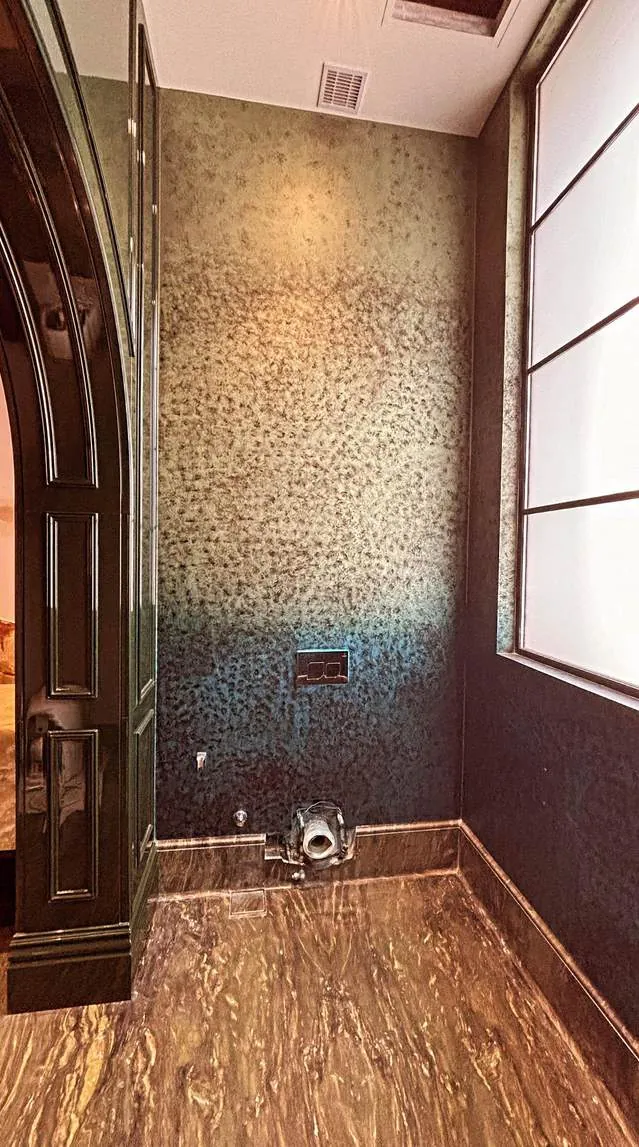
These finishes imitate the natural ageing of metal: the blue-green bloom on copper, the dark mottling of old bronze. They are dramatic and full of character, especially in powder rooms, bars and studies.
Ombré and gradient
A finish that fades from one colour or metal to another — gold to midnight blue, for example. It works beautifully on tall walls and in narrow spaces, where the gradient draws the eye upward.
A finish should be chosen in the room, in the light, next to the furniture — never from a phone screen.
Which finish for which room?
| Room | Good choices | Things to consider |
|---|---|---|
| Living room | Venetian plaster, metallic feature wall, 3D relief | Consider how evening lighting grazes the wall |
| Bedroom | Lime wash, soft plaster, muted metallics | Calm, low-contrast finishes work best |
| Powder room | Patina, ombré metallic, dark plaster | Small rooms can take bold, dramatic finishes |
| Kitchen & bathroom | Sealed plaster, microcement | Needs a moisture-resistant system and sealer |
| Retail & hospitality | Microcement, seamless plaster, metallic | Prioritise durability and easy maintenance |
Will it crack or stain?
Most problems come from preparation, not the finish itself. A properly cured, levelled and primed wall — with the right flexible, breathable system on top — resists cracking. In wet areas, a protective sealer keeps moisture and stains out. At Arya Homes we treat surface preparation as part of the finish, not a separate job.
Caring for a textured or metallic wall
- Dust with a soft, dry cloth; wipe marks with a slightly damp cloth.
- Avoid abrasive pads and harsh chemical cleaners.
- Small scuffs on many plaster finishes can be locally repaired by the applicator.
See it before you choose it
Our texture library holds more than forty signature finishes, each sampled on a real board. Visit us, or ask us to bring samples to your site, and we will help you choose a finish that suits your light, your furniture and the way you live. Learn more about our wall texture and metallic paint service.